

Nightbirds (1974)
Labelle’s breakthrough funk rock record

“Hey sister, go sister, soul sister, go sister”
blaring horns and daring lyrics about a lady of the night—that’s one surefire way to open an album and captivate an audience’s attention. even if you don’t know much about Labelle’s career, you’ve likely heard their standout single “Lady Marmalade”1 in your lifetime. it is the opening track on the album Nightbirds, this month’s featured collectible.
Nightbirds was released on September 13, 1974 on Epic Records. i’ve had the record for years and can’t recall exactly how i acquired it. judging by the marker on the front cover, it’s most probable that i bought it at a thrift store or flea market. either way, the album provided an entry point for me to learn more about Labelle as an “All Girl Band” and their rightful place in music history.
the featured album is Labelle’s fourth LP, and most of the songs were written by Nona Hendryx (except “Lady Marmalade,” “It Took a Long Time,” “Don't Bring Me Down,” “What Can I Do for You?” and “All Girl Band”). the ladies teamed up with producer Allen Toussaint, who stamped the record with New Orleans’ soulful, jazzy essence—hence the references to Creole culture and the Southern city where they recorded the album.
by the time Nightbirds took flight, Labelle, comprising Patti LaBelle2, Nona Hendryx, and Sarah Dash, had undergone an aesthetic reinvention. the trio got their start as Patti LaBelle and the Blue Belles during the 1960s girl group phenomenon. originally they were a quartet—their fourth member, Cindy Birdsong, departed to join The Supremes in 1967.3 around 1970, they encountered Vicky Wickham, a British talent manager and producer who encouraged them to revamp their image and sound.4
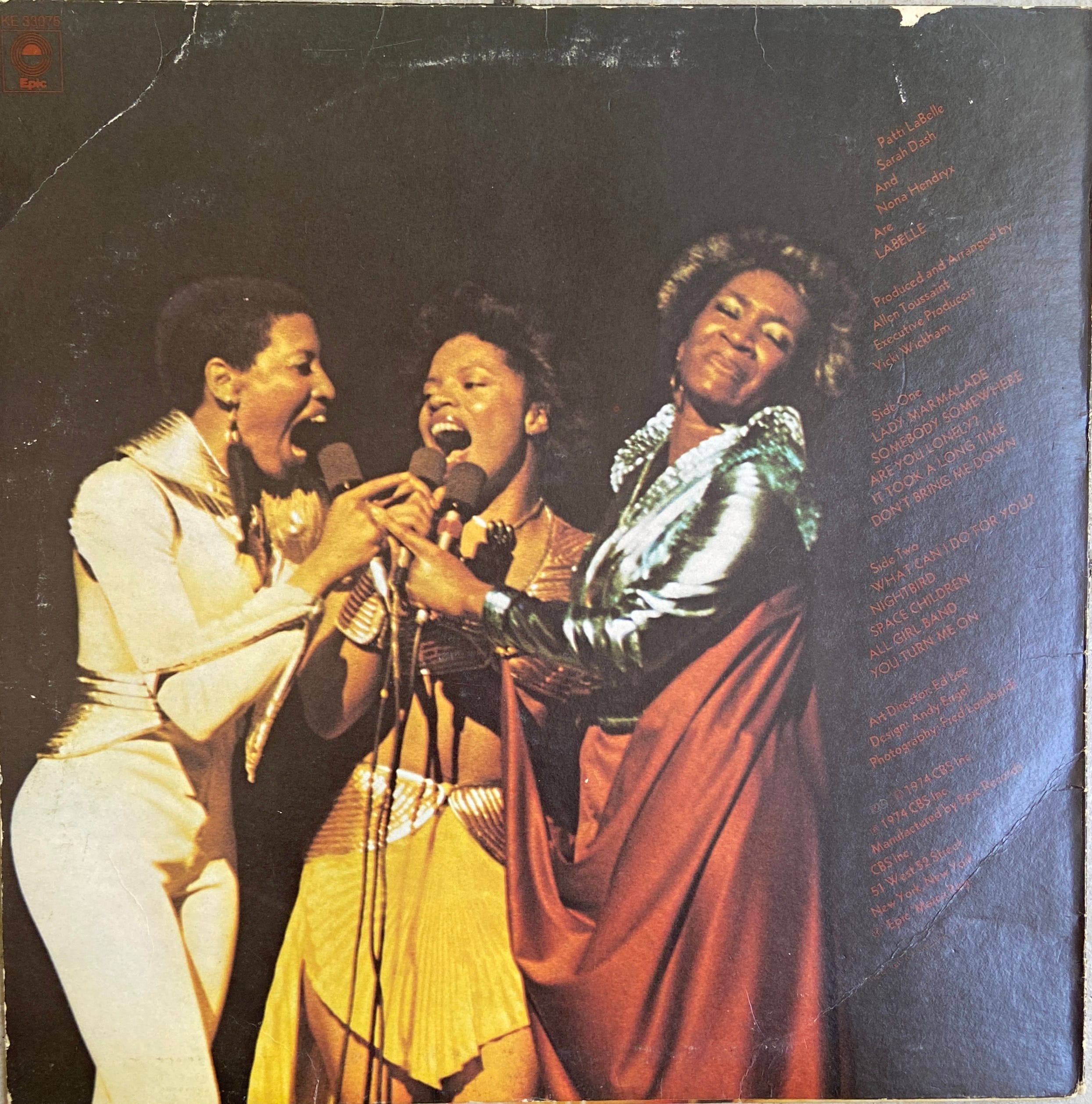
the performers received a new name and a bolder look—see the colorful plumage and eye-catching space-age garments they donned during their heyday. Labelle was Afrofuturistic 20 years before that phrase was even coined. i watched a few of their recorded performances on YouTube and found myself mesmerized by the powerful variety of their costumes. the looks were cohesive enough to signal a recurring theme, but each woman appeared to have a fashion signature that set her individual style apart.
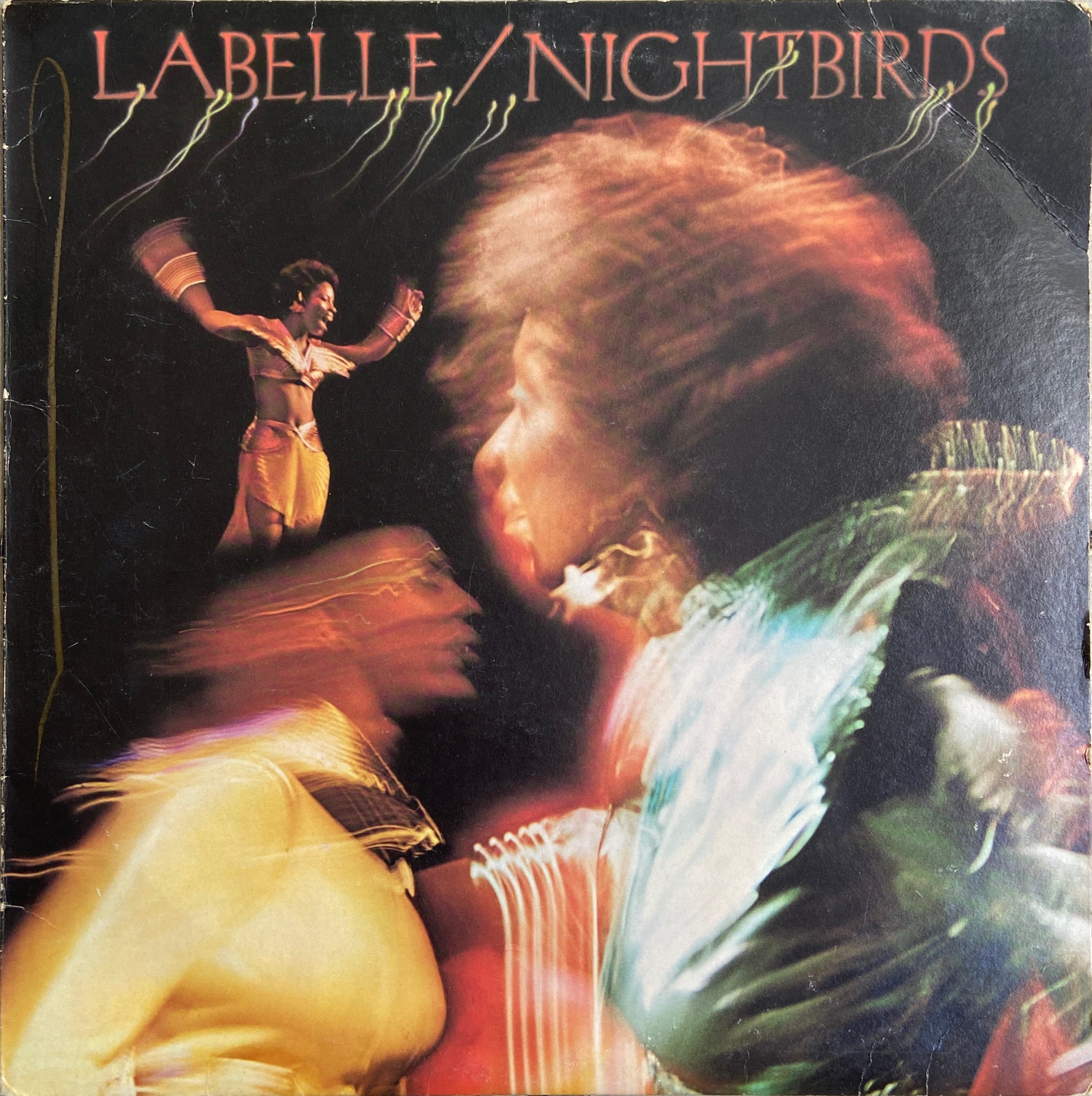
for Dash, it was the dazzling two-piece outfits that showed off her midriff. meanwhile, LaBelle often sported accented sleeves and immaculate drapery that complemented the extravagance of Hendryx’s wings and sparkly headgear—many of their most popular looks during this era can be credited to designer Larry LeGaspi.5 the makeup also matched this galactic energy—theatre folks know that stage makeup is exaggerated to see a performer’s expression from the nosebleeds. hyperbolically speaking, Labelle’s eyeshadow could be seen from space.
i’m a maximalist, so it’s fitting that i’d be attracted to the glitz and glam. but when you look beyond the aesthetics and tap into the music, you recognize that Labelle provided timely commentary on their worldly experiences. without directly naming specific events, the songwriting often addressed what it meant to be young, Black, female, and talented in a time where Civil Rights and women’s liberation were still hot on the breath of politically conscious folks with a pulse.
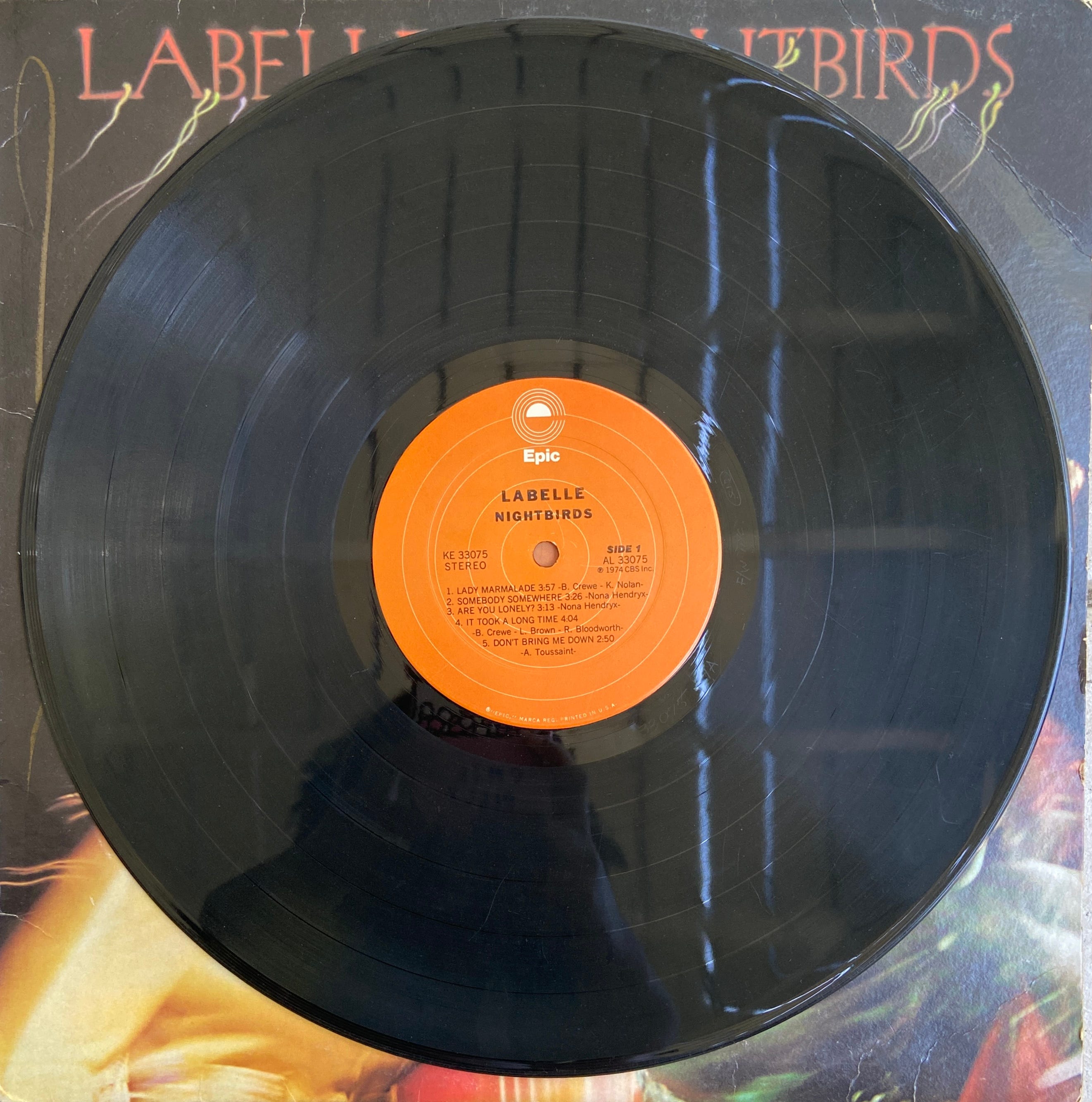
songs like “Are You Lonely?” and “What Can I Do For You?” asked questions that demanded answers; the group’s collective wailing and gospel-esque refrains across the record tapped into generational pain that deserved to be witnessed. the harmonies they’d cultivated in the 1960s shine brightly during the album’s 36-minute run. the union of funk, rock, soul, R&B, and disco lends to an electrifying listening experience.
Nightbirds is a record that i could listen to over and over again. you can tell that the singers finally found their stride after adjusting to the rebrand. there’s something triumphant in the energy of the album, even with the difficult life experiences and subject matter they allude to. the closer “You Turn Me On” is a heartbreaking tune that swells with emotion every time they repeat the chorus. the song fades out at the height of these feelings, prompting one to want to turn the record over and experience the sensation one more time.
Labelle had quite a run in the 1970s: Nightbirds was preceded by their self-titled release in 1971, Moonshadow in 1972, and Pressure Cooker in 1973. following their fourth album’s commercial success, they dropped two more albums in the subsequent years: 1975’s Phoenix and 1976’s Chameleon. after their sixth record, creative differences led to the group’s dissolution.
the women went on to pursue solo careers and reunited in 2008 for another album, Back to Now. the trio made occasional joint appearances and performances until Dash’s death in September 2021 at the age of 76. Hendryx continues to entertain, participate in speaking engagements, and appear in editorials—she is renowned as an artist and technologist who still sports an avant-garde, futuristic style. LaBelle is a household name who’s currently performing on The Queens Tour, a historic run of shows with Chaka Khan, Stephanie Mills, and Gladys Knight.
millennials and younger generations may be more familiar with the 2001 rendition, where Lil’ Kim, Mýa, P!nk, and Christina Aguilera trade off verses to soundtrack a moment in Baz Luhrmann’s Moulin Rouge!
throughout this write-up, Labelle with a lowercase b refers to the group, whereas LaBelle with a capital B refers to Ms. Patti.
read Labelle’s biography on Rolling Stone (archived via The Wayback Machine)
read “Labelle: Tomorrow’s Brightest Stars” by The British Ambassador Of Soul David Nathan, founder of the website soulmusic.com! Nathan has been writing about soul and R&B for 60 years.
I still need to listen to this one! Years ago I brought the Vinyl for Phoenix & then while going through my late grandma's house found her Chameleon record. 🥹 love this feature!
great write up of a classic lp.